
In a Remote School in Niassa, One Teacher Keeps Six Grades Learning
By Felix Filipe Alberto Ndoca starts his mornings early at...
Insights
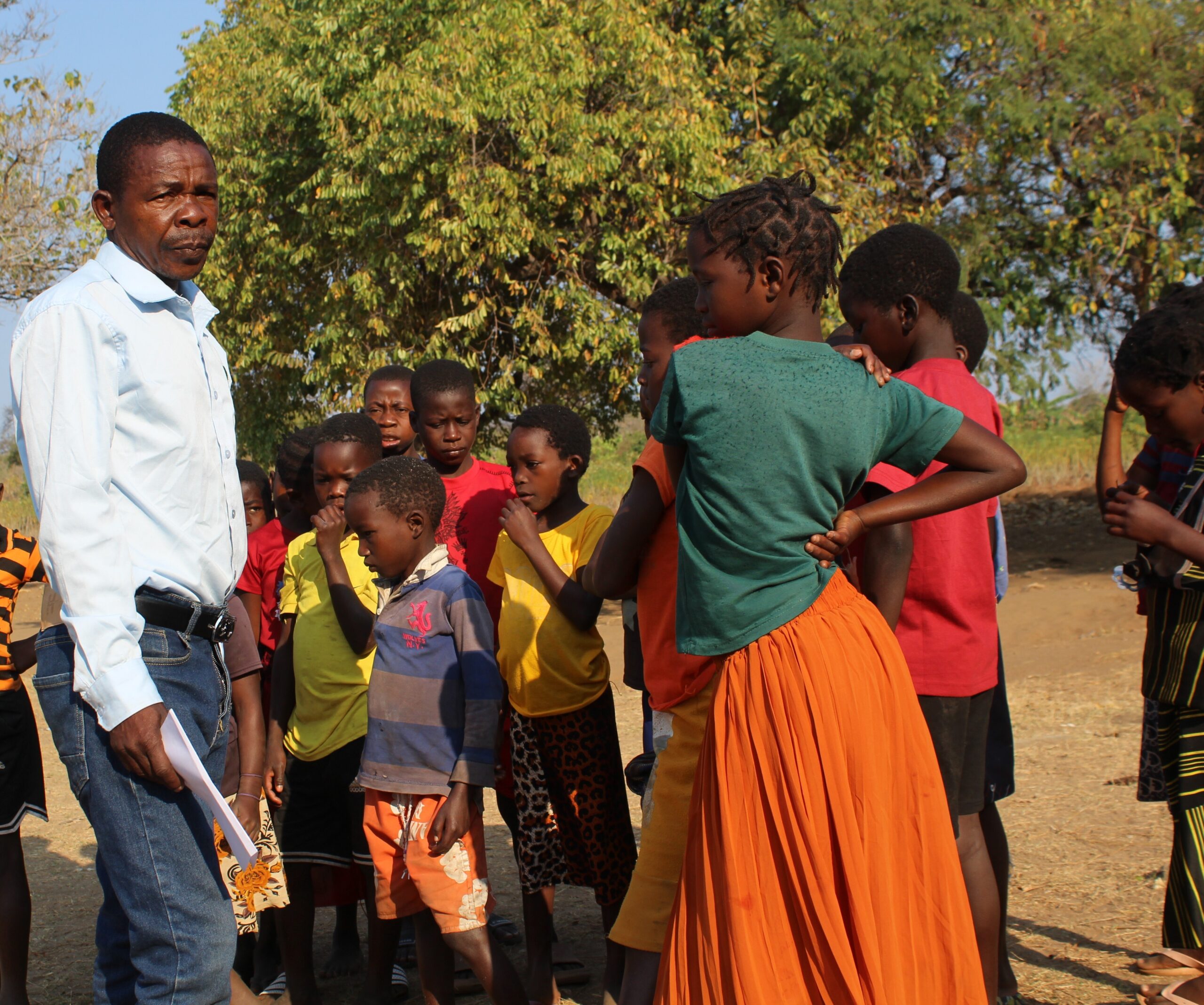
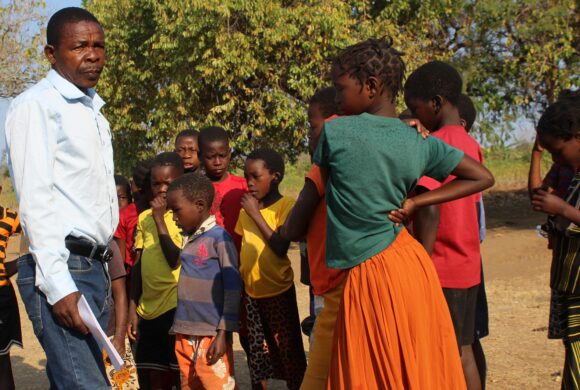
Alberto Ndoca gathers his Grade 6 students for their next lesson, while another class continues working independently nearby. Credit: JSI Mozambique
By Felix Filipe
Alberto Ndoca starts his mornings early at Chicoa Primary School, in Mozambique’s Niassa Province. Within a few hours, he will have moved between six grades, checked exercises and notebooks, and tried to understand which children can already read, write and count and which need extra support. The school has three classrooms and 249 students. Ndoca is the only teacher. In the morning, he teaches Grades 1, 2 and 6; in the afternoon, he continues with Grades 3, 4 and 5. There is little time to stop between classrooms. When one lesson ends, another begins. After classes, administrative responsibilities continue. Ndoca is a teacher, but he is also the school director, pedagogical lead, and administrative officer.
“It is me. I am alone,” he says.
Ndoca participated in a professional development training organized through the Empowering Educators project, funded by the Embassy of Ireland and implemented by World Education, a JSI initiative, in partnership with the Ministry of Education and Culture. During this training, he briefly shared his experience at Chicoa, which led our project team to visit Ndoca at his school and to interview him to better understand how Continuous Professional Development (CPD) can support education professionals like him who work in demanding contexts every day.
At the school, Ndoca’s role goes far beyond the classroom. He prepares assessments for all six grades, follows up with students, handles administrative tasks, and oversees pedagogical activities. When an assessment needs to be prepared, he does it. When documents need to be organized, he handles them. When a class needs attention, he is the one who enters the classroom. The Chia Pedagogical Influence Zone (ZIP), to which the school belongs, has five schools with three to six teachers each, but at Chicoa the daily responsibility for six grades rests with one person.
This reality comes at a cost. Ndoca acknowledges that there are days when he feels he cannot teach. One day, a severe headache prevented him from entering the classroom, and there was no other teacher to replace him, so classes were cancelled. Still, when asked whether he has ever thought about leaving the profession, his answer is no: “I have never thought of giving up, because I know that this is my daily bread. I have had to sacrifice so that I can keep doing this work.”
When Ndoca arrived at Chicoa Primary School in late March, he found 150 students in a school with limited resources–a box of chalk, erasers, and three attendance books–and no other teachers. Classes started about two months after the official beginning of the school year, and the school needed to regain its momentum. Today, there are 249 students. This growth didn’t happen because of a major physical transformation of the school. It happened because of the way Ndoca chose to work with students, families, and the community.
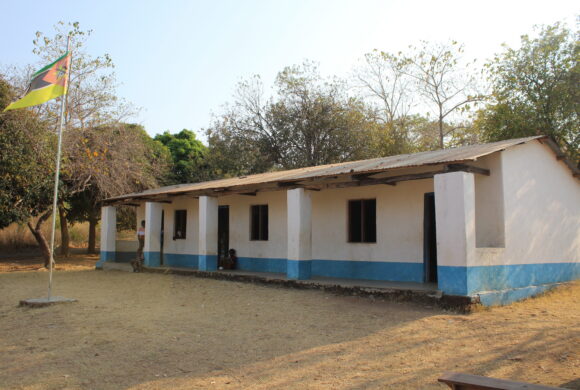
Chicoa Primary School, the only school building serving the community, where teacher Alberto Ndoca teaches six grades while also serving as the school director and pedagogical lead. Credit: JSI Mozambique.
Ndoca realized he could not open up the school every day and simply wait for children to come. Some children live nearby, while others walk for about 45 minutes to reach the school. In a community where getting to school already requires effort, Ndoca understood that keeping children in school also required attention. When attendance began to decline, he decided to talk with students and their families. On the weekends, he visited families to talk with parents and caregivers about the importance of education and keeping children in school. He also worked with the village’s traditional leaders, who helped him mobilize families and reinforce the importance of regular school attendance. Whenever he could, he bought biscuits and juice with his own money to give to the children as a small form of motivation. This small act didn’t solve the school’s challenges, but it did show the children that their presence mattered.
Of the 249 students, approximately 103 are girls. According to Ndoca, he closely monitors girls’ participation and has not observed significant dropout rates among them. Ensuring that both girls and boys remain in school is part of the same reason that brings him to the classroom every day: “My mission is for the children to learn to read, write, and count.”
The World Education team met Ndoca during a training supported by the Empowering Educators project. His story stood out not only because of the challenges he faces but also because of the way he speaks about his school. Rather than focusing on what is missing, he talks about what he can do. His experience shows that teaching means understanding students’ circumstances, talking with families, following up on attendance, making sure all children stay in school, and thinking of the school as a place of learning and belonging.
Ndoca received CPD training in positive discipline, fair treatment of girls and boys, and welcoming school planning, which can reinforce and strengthen the approaches he already uses to create more respectful learning environments, respond to the needs of both girls and boys, and turn school priorities into concrete actions. CPD does not replace the need for more teachers, desks, or improved infrastructure, but it can strengthen the ability of professionals working inside schools every day to teach, lead, and respond to the challenges they face. The CPD program goes beyond the training itself and includes ongoing support, follow-up, and supervision through the education system.
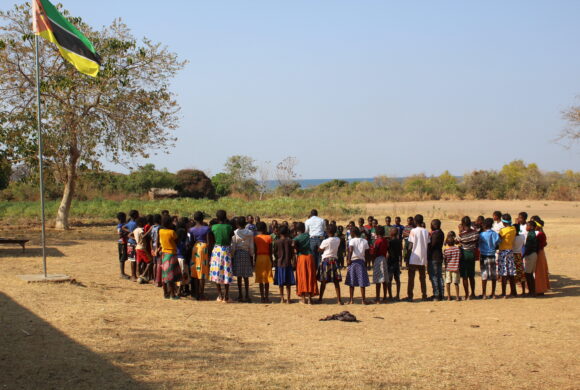
Alberto Ndoca teaching one of his classes outside. Credit: JSI Mozambique
Chicoa Primary School still needs more teachers, better conditions, and more resources. Ndoca knows this. But the school’s transformation began when Ndoca arrived, found 150 students, and decided to stay, work with the community, and help bring children back to school.
In Chicoa, Ndoca continues to arrive early, enter one classroom, and then another. He continues to teach, assess, guide, and lead. The school still does not have everything it needs. But it is no longer the same school he found in March. Ndoca’s dedication and skills, supported by CPD training, are improving the school–and his students’ lives–one day at a time.
Community trust is often overlooked as a barrier to accessible...
Digitizing health data enables instant access to accurate records, bolstering...