


Supporting Countries with Vaccine Prioritization and Optimization
As countries face an increasingly challenging global health environment, the...
Insights
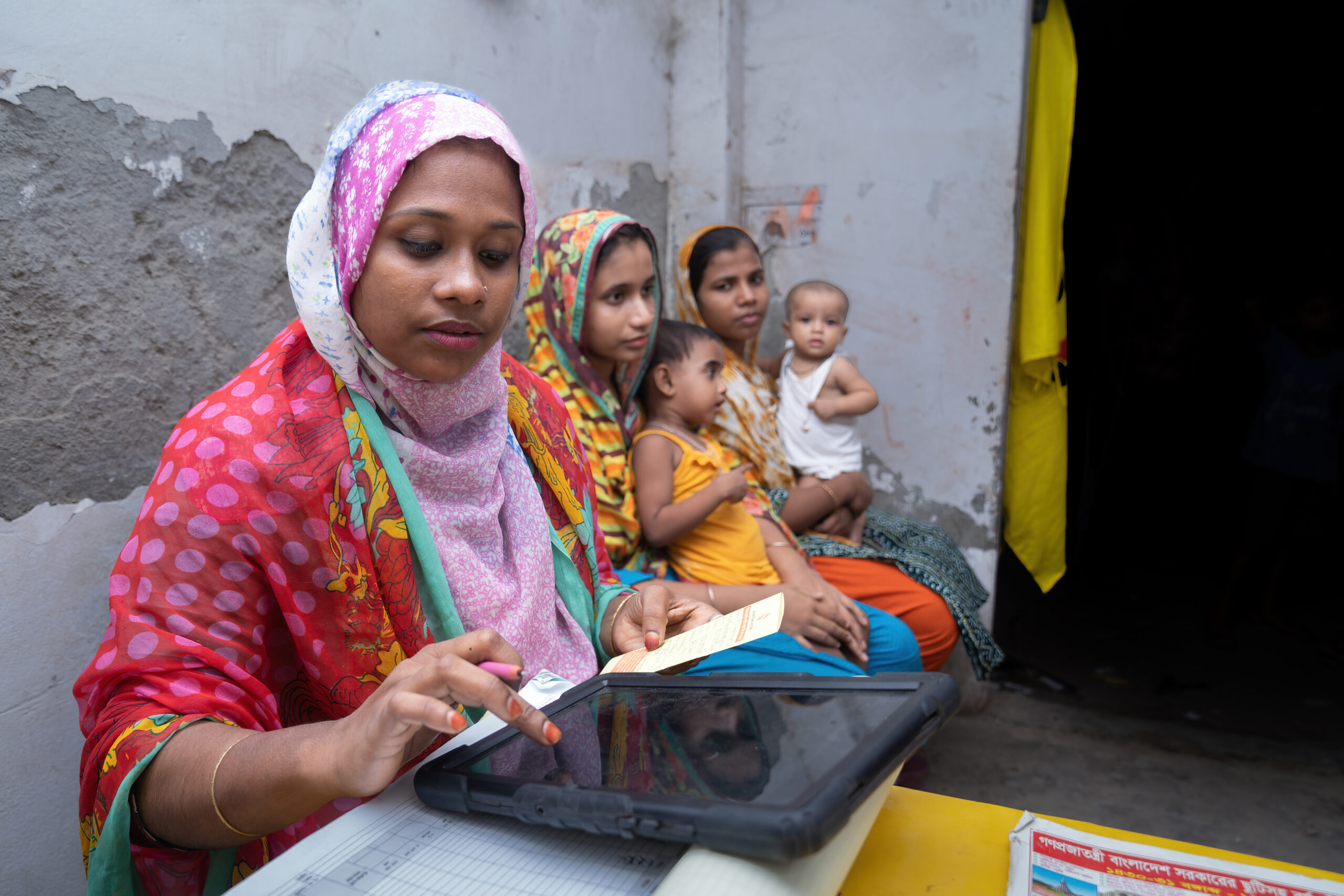
A paramedic uses an e-tracker in Dhaka North City Corporation, Bangladesh, to support digital registration and follow-up for children due for vaccination. Photo credit: Bangladesh Learning Hub/icddr,b.
Providing zero-dose and under-immunized children with the vaccines they need requires understanding why they haven’t received them and how programs can respond with evidence-driven action. These children are often concentrated in communities faced with geographic barriers they need to overcome, service delivery gaps, financial constraints, and limited access to timely, reliable data. Reaching them requires not only national coverage estimates, but also practical evidence, local adaptation, and technical support that responds to country realities.
From 2022–2026, JSI served as the global learning partner for the Gavi-funded Zero-Dose Learning Hub (ZDLH), working with consortium partners including the International Institute of Health Management Research and The Geneva Learning Foundation. Together, the consortium supported Country Learning Hubs in Bangladesh, Mali, Nigeria, and Uganda to generate, synthesize, and apply evidence to identify and reach zero-dose and under-immunized children.
ZDLH was designed as a hub-and-spoke learning model. Country Learning Hubs generated country-level programmatic data and evidence, with a focus on subnational learning and application. At the global level, JSI and partners supported technical assistance, evidence synthesis, knowledge translation, and cross-country learning. Through this bidirectional flow of evidence, the experiences, questions, and constraints identified by country teams shaped the global learning agenda.
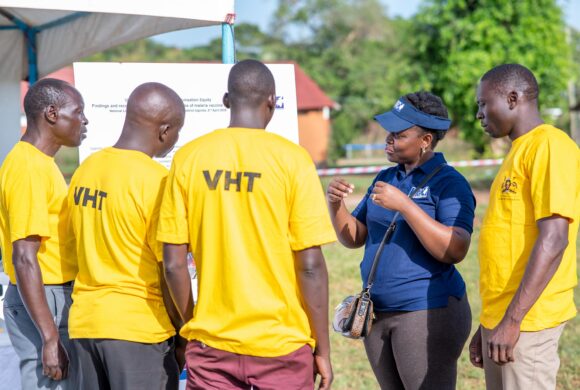
Uganda Learning Hub team members share findings with Village Health Teams to support local action for reaching ZD and UI children. Photo credit: Uganda Learning Hub/IDRC.
A defining feature of JSI’s global learning partner role was demand-driven technical assistance. Rather than delivering a standardized package of support, JSI worked as a thought partner alongside country teams, adapting technical assistance to the needs emerging through implementation research and evidence generation and use. Support included operational troubleshooting, technical review, capacity strengthening, methods guidance, workshops, mentorship, and knowledge translation.
This approach created a feedback loop between country-level implementation and global learning. When a technical gap surfaced in one country, JSI supported that team directly. When similar needs emerged across countries, those repeated challenges signaled broader gaps in global guidance. Over time, this demand-driven technical assistance model helped convert country-level needs into practical global tools.
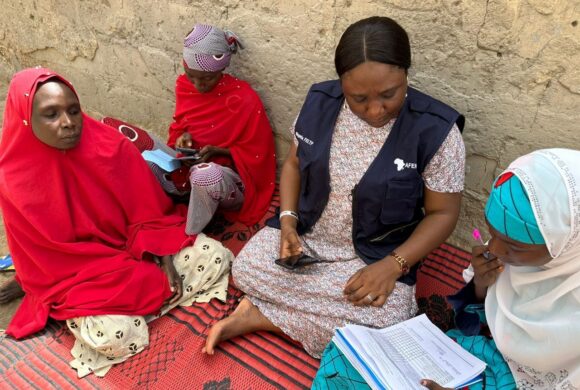
A Nigeria Learning Hub team member engages caregivers during household survey data collection focused on ZD and UI children. Photo credit: Nigeria Learning Hub/AFENET.
One of ZDLH’s clearest legacies is its suite of toolkits and technical resources, which JSI created in response to persistent constraints identified through the learning hubs and Gavi, rather than as stand-alone products. Together, these resources help address global gaps in how teams evaluate zero-dose strategies, estimate costs, monitor performance at decentralized levels, and translate evidence into use.
JSI developed the Theory-Based Evaluation Toolkit to respond to the need for evaluation approaches that fit complex and changing implementation environments. Across global health programs, teams often need to understand not only whether an approach worked but also why it worked, under which conditions, and what changed along the implementation pathway. Developed through ZDLH’s work on zero-dose programming, the toolkit offers a practical approach for strengthening causal logic, making assumptions explicit, and supporting adaptive learning when experimental designs are not feasible.
JSI’s Costing Toolkit addresses the need for practical, transparent approaches to estimating costs to reach children consistently missed by routine vaccination services. Costing is essential for planning, budgeting, advocacy, and scale-up, yet the global evidence base for zero-dose intervention costs remains limited. The toolkit supports teams in estimating incremental retrospective costs using a bottom-up, ingredients-based approach, helping programs understand cost drivers, potential efficiencies, and where underfunding could compromise implementation.
JSI developed the Lot Quality Assurance Sampling (LQAS) Toolkit to support decentralized monitoring and decision-making. National and district coverage estimates can mask local variation, especially when zero-dose and under-immunized children cluster in specific pockets. LQAS helps program managers classify supervision areas against vaccination coverage targets and identify where corrective action may be needed. The toolkit provides operational guidance, practical examples, templates, decision rules, and step-by-step support for using LQAS in immunization monitoring.
JSI created a Knowledge Translation Toolkit to help close the gap between evidence generation and evidence use. Strong findings do not automatically change policy, programming, resourcing, or practice. The Knowledge Translation Toolkit and companion measurement guidance support teams to plan stakeholder engagement, tailor messages to decision-makers, and track progress across the knowledge translation pathway from dissemination and transmission to acquisition, application, and impact.
These resources reflect JSI’s broader capability to transform technical assistance into reusable global goods. JSI developed ZDLH’s toolkits to strengthen approaches to reach zero-dose children in the four Country Learning Hub countries, but their utility is not limited to immunization. Each toolkit addresses a core challenge that appears across global health programs: how to evaluate complex strategies, estimate localized costs, monitor performance at decentralized levels, and translate evidence into use.
Because they are built around practical methods, templates, and decision-making processes, the ZDLH toolkits can be adapted and applied to other areas of global health where programs are working to reach underserved populations, respond to local barriers, and use evidence for course correction. The same proven practices—demand-driven technical assistance, country-led learning, adaptive implementation research, practical methods guidance, costing for decision-making, decentralized monitoring, and intentional knowledge translation—can strengthen programs and contexts beyond immunization.
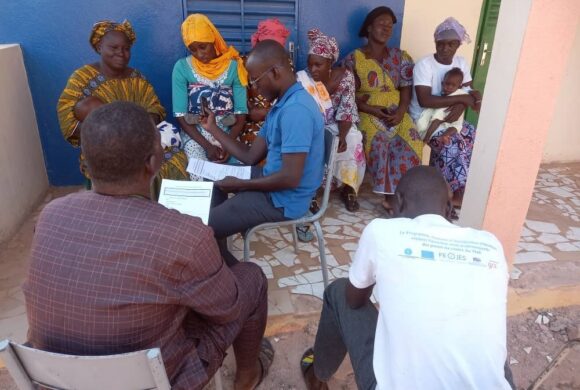
A focus group discussion at CSCom Central in Tominian, Mali, supports Learning Hub rapid assessment activities to understand barriers to reaching ZD and UI children. Photo credit: Mali Learning Hub/GaneshAID.
JSI’s ZDLH experience points to important lessons for the future. Data availability has improved, but global and country teams still face persistent issues related to data quality, local-level measurement, and the ability to translate coverage data into actionable decisions. As Gavi moves toward its sixth strategic period, the ZDLH experience offers a model for how global learning investments can strengthen countries’ prioritization of vaccine programs as appropriate to their context, as well as improve programmatic and financial sustainability of these programs.
Through ZDLH, JSI demonstrated that technical assistance is most valuable when we listen first, respond to country needs, and turn recurring implementation challenges into tools that others can use. As the ZLDH concludes in 2026, its legacy is not only the evidence generated or the resources published but also a way of working: supporting country teams to ask better questions, using evidence more effectively, identifying where guidance falls short, and building practical tools that can strengthen decision-making across programs and contexts.
The ZLDH model is indicative of JSI’s contribution to global health. Across immunization and beyond, JSI brings the technical depth, implementation experience, and knowledge translation expertise needed to move from data to learning, from learning to action, and from country experience to global practice.
The Ethos: Localization as a Catalyst for Change Recognizing that...

Every year, vaccines protect hundreds of millions of people from...