

Transforming Last-Mile Health Care through Data Use
A health system is only as strong as its ability...
Insights

Pregnancy-related deaths in the U.S. number about 650 to 700 annually, and as many as 60,000 U.S. women are affected by severe maternal morbidity, which includes unexpected outcomes of labor or delivery that have serious short- or long-term health impacts. In most instances, timely care can prevent these health outcomes related to pregnancy, childbirth, and the postpartum period. The CDC estimates that more than 80% of pregnancy-related deaths—those occurring during pregnancy and in the postpartum period from a pregnancy complication—are preventable (1).
The United States is experiencing a perinatal care access crisis as birth facility closures increase throughout the nation: between 2010 and 2023, 641 hospital labor and delivery units closed nationwide (2). Following a closure, patients may experience gaps in care and/or need to travel farther to receive timely care for perinatal complications, raising maternal and infant risk. As the number of labor and delivery units decreases in rural and low-resource settings, more pregnant and postpartum women are receiving obstetric care in non-delivery settings, such as emergency departments and through emergency first responders. Facility closures, combined with perinatal workforce shortages, also contribute to fewer choices and increased stress for people seeking perinatal care.
Colorado is navigating a wave of birth facility closures that mirrors the fragile national health ecosystem. As a result, 40% of Colorado counties have been designated as maternity care deserts, and 98% of Coloradans now live in an area with an inadequate supply of prenatal health care. In 2025, the Colorado Department of Public Health and Environment (CDPHE) engaged JSI to conduct a study focusing on access to perinatal care in rural regions and the impacts of birth facility closures.
“Study participants shared that the primary consequence of a birth facility closure was increased travel time to care. In rural Colorado, that is often exacerbated by weather, mountain passes, and wildlife on the roads. The increased travel time can be financially and logistically burdensome for women and families, given transportation needs and the implications on childcare and employment leave time,” Caitlin Hungate, co-investigator, co-author, and Senior Associate at JSI, said. The study revealed that birth facility closures can shift the burden of obstetric emergencies to hospital emergency departments and emergency medical services in the impacted area, which are often underprepared to handle them (e.g., staff lack clinical training and/or experience in labor and delivery and/or lack appropriate specialized equipment).
The experiences of study participants highlight the need to strengthen system and workforce readiness for obstetric emergencies amid gaps in perinatal care access. The study revealed needs including ongoing simulation and additional training to respond to obstetric emergencies such as an emergency department birth or an emergency transfer; funding for new equipment; and increased coordination and collaboration between community birth providers (e.g., midwives) and local emergency medical services to strengthen and streamline transfers from community settings to hospitals.
Following the study, JSI authored a legislative report that offers recommendations to strengthen Colorado’s perinatal system of care and ensure access to safe, reliable, quality care. Recommendations include:
Going forward, Colorado must prioritize actions to improve perinatal care access in order to prevent and prepare for obstetric and neonatal emergencies and support timely, quality care, especially following a birth facility closure. Read the legislative report for a summary of the findings, recommendations, proposed action steps, and best practice guidelines that provide a roadmap for navigating birth facility closures.
Nationally, maternal health quality improvement initiatives, like the Alliance for Innovation on Maternal Health (AIM), can also help support improvements in obstetric emergency care to address gaps in perinatal care. AIM is a HRSA-funded national, cross-sector commitment designed to support best practices that make birth safer, improve maternal health outcomes, and save lives. The AIM Technical Assistance Center, managed by JSI, works to reduce maternal mortality and severe maternal morbidity within the United States by supporting the implementation of evidence-based patient safety bundles in 51 states/jurisdictions and over 2,095 birthing facilities (74% of all birthing facilities in the U.S.). Additionally, the AIM TA Center offers best practices for use in non-obstetric or lower-resource settings, including the AIM Obstetric Emergency Readiness Resource Kit and AIM Community Birth Transfer Resource Kit.

Working in remote villages across Nigeria, Elizabeth Hassan stands as...
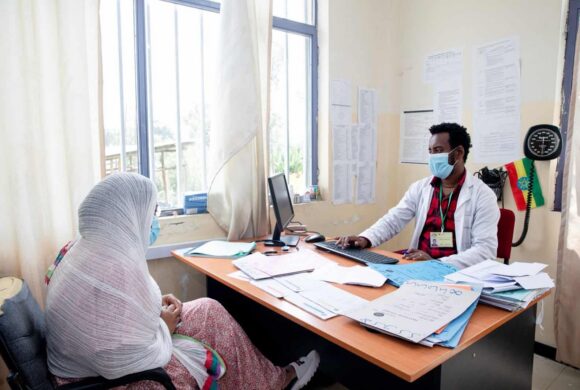
In the last decade, Ethiopia has committed to a complete...