


World Education Signs Partnership Agreement with Ivorian Ministry of Education to Support School Management Committees
World Education, a JSI Initiative, and Côte d'Ivoire’s Ministry of...
Insights
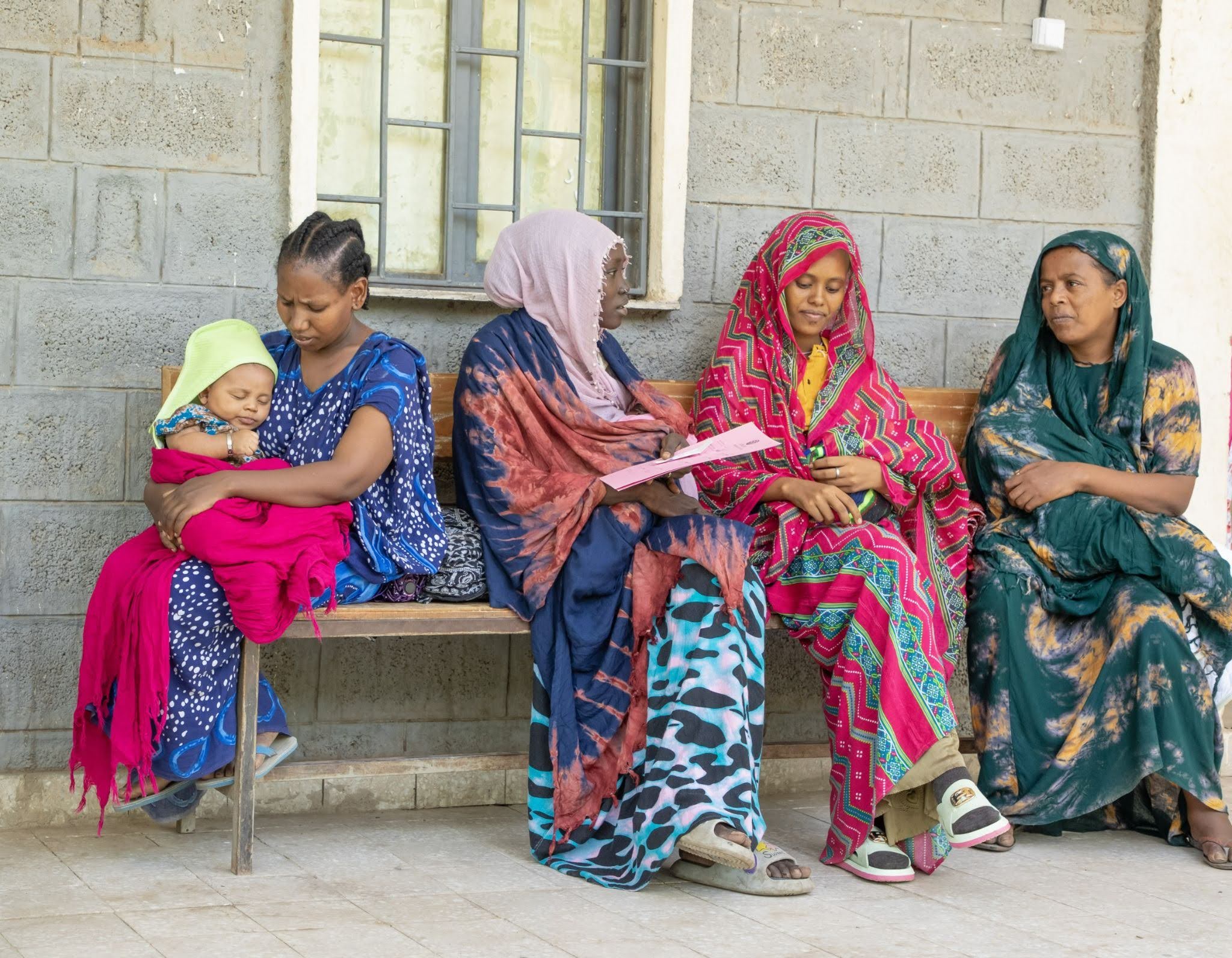
New mothers visit Awash Arba Health Center to ensure their newborns receive essential vaccines after a safe delivery. Credit: JSI Ethiopia
Shortly after welcoming her baby, complications arose. Momina Nur Hussien began bleeding heavily, growing pale and weak as her blood pressure dropped. Postpartum hemorrhage (PPH) is a leading cause of maternal mortality in Ethiopia. In pastoralist communities of Ethiopia, long distances to health facilities, harsh terrain, and tough weather compound emergency care. For years, midwives could only watch helplessly as postpartum bleeding slipped into life-threatening conditions.
“We were doing our best,” recalls Awoke Friew, a senior midwife who attended Momina at Awash Health Center. “Momina was losing blood quickly, and in the past, estimating blood loss visually meant we often guessed. Moments like those leave every midwife feeling defenseless, you know time is running but you lack tools to act decisively.”
Working with local health leaders through our Strengthening Service Delivery (SSD) project, JSI evaluated the causes of PPH in these regions. According to Etaferahu Yimam, a senior health worker and clinical supervisor in the Afar Region, early detection was the greatest barrier to life-saving action. “Health workers had to rely purely on subjective measurement of blood loss, often ending with delayed detection of PPH, which led to life threatening complications and maternal death.”
In March 2025, JSI, with the Ministry of Health, regional health leaders, and local health administrators introduced a targeted, evidence based, comprehensive PPH management initiative, called the E-MOTIVE bundle. This bundle includes:
The e-MOTIVE bundle approach was launched through training among midwives and care providers on comprehensive PPH prevention, early detection and management. The training included offering uterine massage, evaluation, and escalation. Further, regular, on-site supportive supervision, clinical mentorship, and review were offered to reinforce skills, maintain facility supply readiness and facilitate cross learning sessions.
“They placed a plastic bag under me to monitor my blood loss and gave me intravenous fluids in both arms. They saved my life.” Momina recalls her post-delivery care at the onset of bleeding.
Between April 2025 and May 2026, JSI, in collaboration with regional health bureaus, trained 155 health providers (106 through blended learning and 49 via traditional face-to-face methods) across four regions. We distributed 16,500 bundles.
Progressive improvement in drape application and early detection of PPH: Out of 15,770 vaginal deliveries recorded, calibrated drapes were applied in 14,239 cases (90%). A total of 348 PPH cases (2%) were detected, and the full E-MOTIVE bundle treatment was administered to 342 (98%).
There was an 83% reduction in blood transfusion rates (dropping from a baseline of 52% to 8%) and an 80% reduction in referrals to higher-level care facilities (dropping from a baseline of 19% to 4%).
In remote areas of low- and middle-income countries, emergency transfers to higher-level care centers are a high-stakes race against time; this is especially critical in PPH. Consequently, objective, real-time blood loss measurement and early intervention can ultimately ensure that mothers like Momina return home safely with their newborns.
Community trust is often overlooked as a barrier to accessible...

Substance use and mental health are shaped by what happens...