Integrating for Impact: Scaling HIV’s Supply Chain Success to Build Health Resilience
story
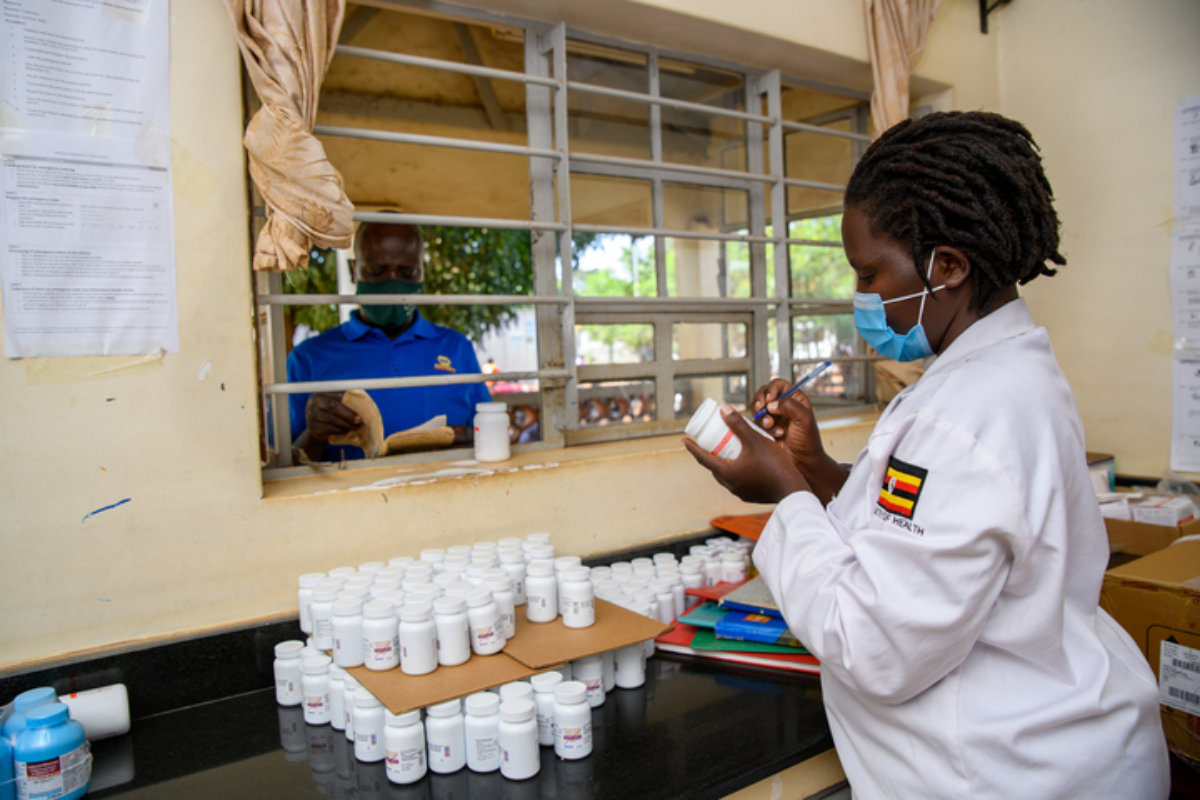
For too long, health supply chains have been treated as technical support functions rather than strategic national assets. They determine resilience during crises, shape market dynamics, influence national budgets, and underpin universal health coverage. Strong health systems depend on well-designed and efficiently operated supply chains to deliver products to people where and when they need them. When countries can independently manage the supply chains that deliver HIV medicines, diagnostics, and other essential health products, they evolve from recipients of partner-driven support to designers and stewards of their own national systems. JSI builds on decades of transformation efforts in the HIV supply chain system to partner with countries to develop and strengthen integrated, resilient supply chains.
HIV programs fundamentally shaped global health supply chains by investing in the early systems to manage critical HIV commodities. In the early 2000s, JSI worked with ministries of health in Kenya, Uganda, Zimbabwe, and others to design their first national supply chain systems for antiretrovirals (ARVs), HIV test kits, and laboratory commodities. In some countries, these foundational efforts became the platforms for integrating additional products, such as malaria and essential medicines, into one unified supply chain.
Even in countries where health program supply chains are not yet integrated, the skills and systems developed under HIV programs—quantification tools, standard operating procedures, and a trained cadre of logisticians—provided collateral benefits to the broader health supply chain ecosystem. In this sense, HIV supply chains not only delivered medicines and diagnostics; they delivered managerial confidence and capacity. Ultimately, the deepest legacy of HIV investments is institutional: a generation of ministry staff with the expertise to run complex, data-driven national supply chain systems.
In Tanzania, for example, the electronic Logistics Management Information System (eLMIS) is fully integrated across program areas. HIV and other essential products are delivered to health facilities together on the same trucks. When the country shifted from three-month dispensing to a six-month ART regimen in 2021, it was a major operational transition affecting more than 1.5 million patients. The Ministry of Health, supported by U.S. government investments, began by assessing stock levels across 7,000 facilities, validated patient appointment data, and then used that information to revise forecasts and adjust national supply plans. Weekly monitoring ensured any deviation at the facility level triggered immediate adjustments in national planning. Rather than a donor-driven crisis response, Tanzania leveraged its national data system to make informed decisions. As a result, one-third of ART clients now receive a six-month supply of medication, facilities’ congestion decreased, adherence improved, and stockouts were avoided.
If HIV supply chain systems provide the muscle, integration provides the multiplier. JSI’s supply chain integration framework, adapted from commercial-sector best practices, identifies opportunities to integrate across health program supply chains while also bringing together data, processes, people, functions, and partners into a cohesive whole. Full integration means linking distribution planning with forecasting, creating interoperable digital systems from the port of entry to the last mile, and forging stronger connections between national and regional actors as well as across the public and private sectors. This comprehensive approach reduces fragmentation and improves overall efficiency, thereby strengthening the “six rights” of supply chains: the right product, place, time, quantity, condition, and cost.
We can continue to build on the foundation that HIV supply chains provided in many countries as we work towards more integrated, resilient supply chains by considering the following:
The strategic value of the health supply chain is undeniable: it is the engine of health care delivery. Developing integrated, data-informed, and nationally-led systems ensures that governments stand ready to deliver medicines exactly when and where they are needed.
We strive to build lasting relationships to produce better health and education outcomes for all.