Bridging the Immunization Gap in Bayelsa’s Riverine Communities
story

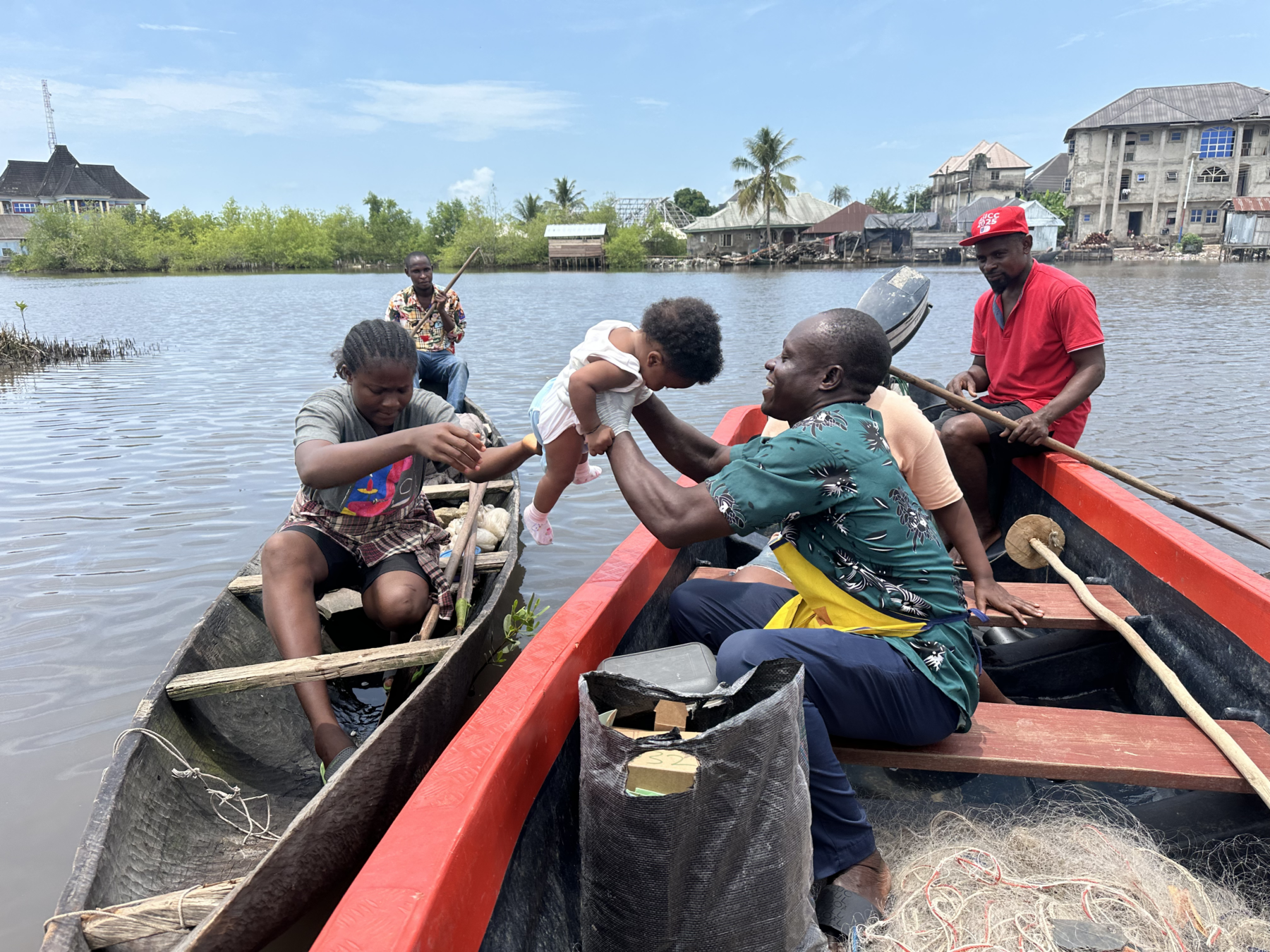
A mother brings her child on a hand-pulled canoe to meet the vaccination team.
Access to health care in Nigeria’s riverine communities is severely limited, leaving many residents reliant on costly, dangerous boat trips to distant towns. For the fishing communities of Ibembe-Kiri, Iseleama, and Floriakiri, collectively known as the Brass Local Government Area (LGA), the closest health facility is a treacherous, two-hour voyage by hand-pulled canoe over high seas.
For a mother in one of these remote fishing camps, seeking routine immunization means facing high transportation costs and safety risks. Even parents supportive of childhood vaccination find receiving the immunization a daunting endeavor.
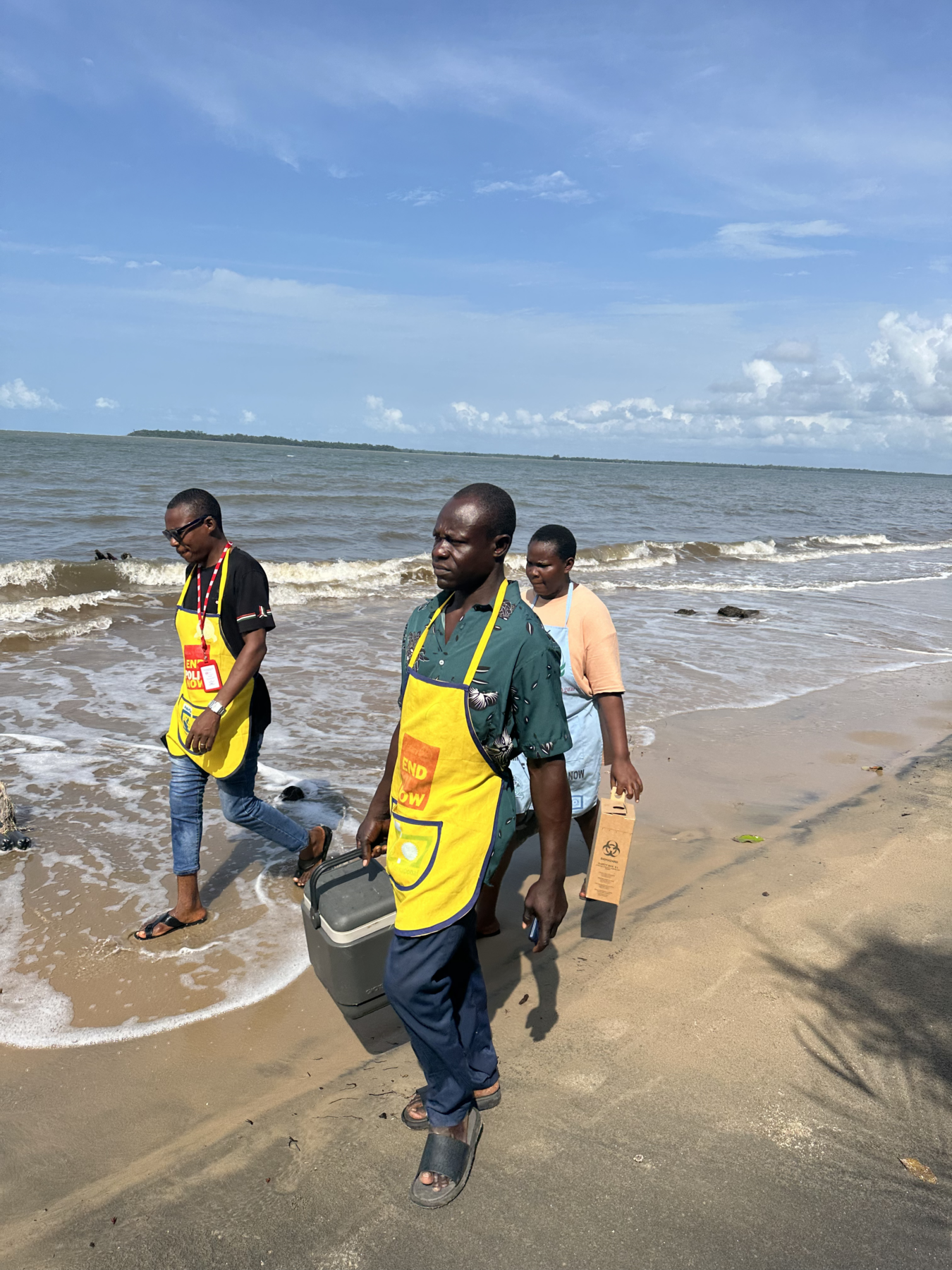
JSI supported the vaccination team’s trek through the mangrove swamp forest along the coast of the Atlantic Ocean in Brass LGA.
Rather than waiting for families to take these risks, JSI provided technical and logistical expertise to bring vaccines directly to the riverine communities. Through the Routine Immunization Project funded by Nadační fond Kladné nuly and facilitated by Project Resource Optimization, JSI partnered with the Bayelsa State Primary Healthcare Development Agency and Brass LGA health teams to launch a boat-based outreach strategy. JSI provided microplanning, logistics coordination, community mobilization, and supportive supervision to ensure quality service delivery.
The vaccination team conducted mobile outreach over two days with three team members: a vaccinator, a data recorder, and a community mobilizer. Each day of mobile outreach began with a visit to Odio-Ama and Iseleama primary health clinics to collect vaccines, packing them on ice to maintain the cold chain for the day-long journey through the region. JSI trained both the vaccinator to educate caregivers on the benefits of vaccination and potential side effects, and the recorder to enter information into the JSI DHIS2-based digital routine immunization data capture mobile application and paper-based registers.
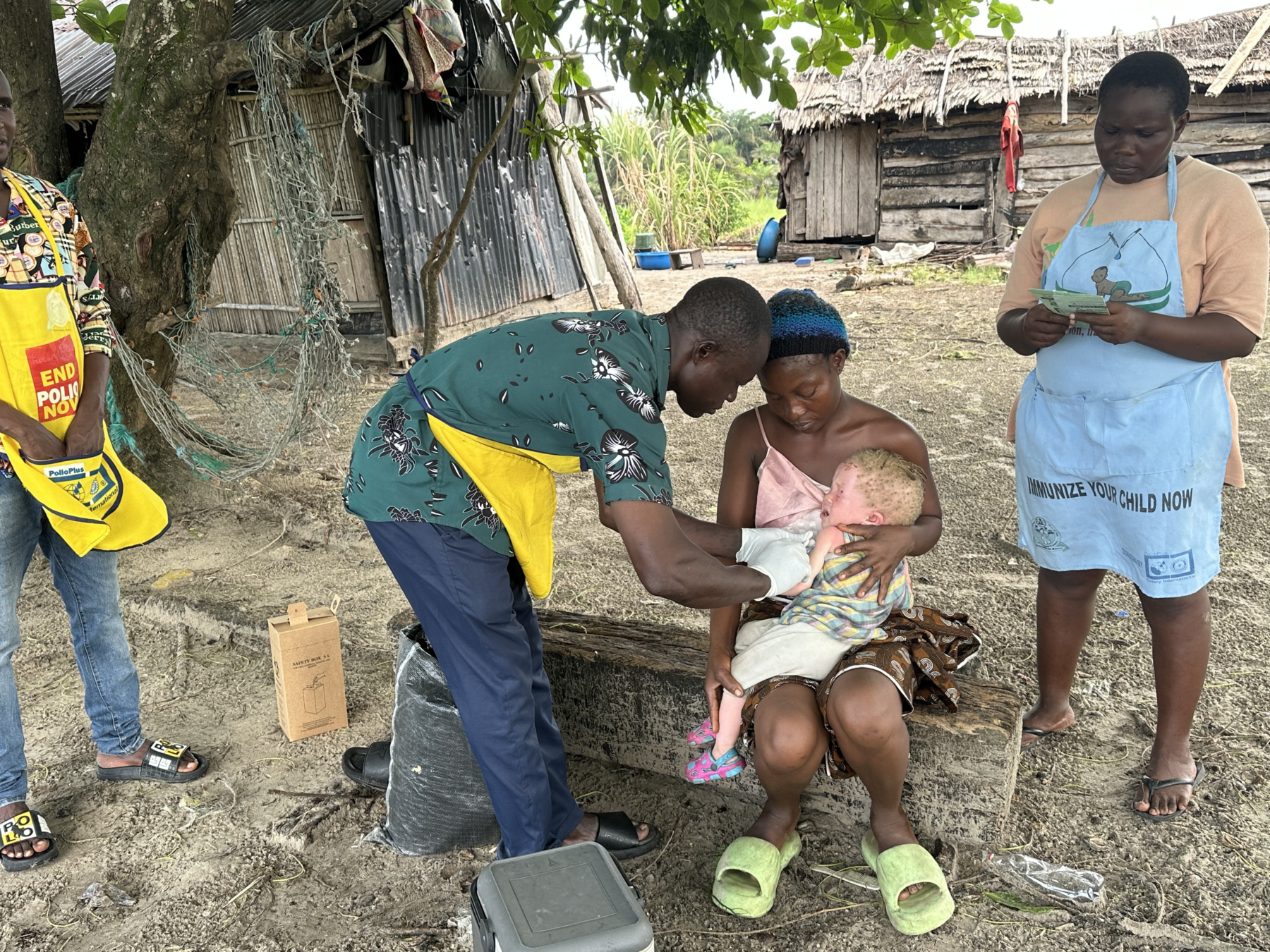
JSI supported the vaccination team at a fishing camp in Brass LGA.
By meeting mothers at the water’s edge, JSI and Nigeria’s primary health care development agencies are proving that no child is too remote to be reached with critical health services. Between August 2025 and March 2026, our team:
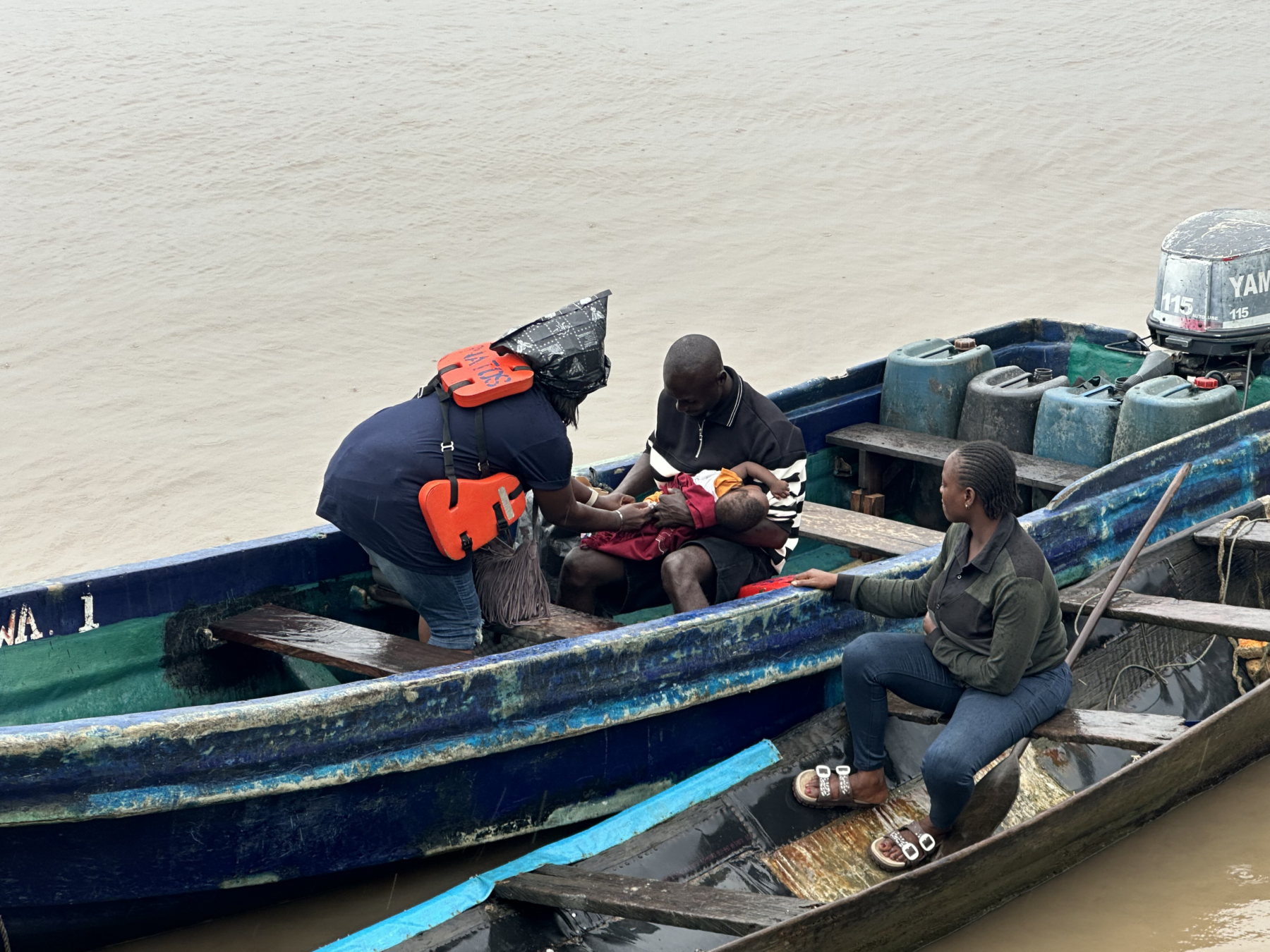
A father on a vaccination team vessel.
Building on this success, JSI will continue to work with Nigerian states and local governments to support the expansion and institutionalization of outreach strategies tailored to hard-to-reach communities. This includes strengthening local health system capacity for microplanning, improving logistics for outreach, and adapting creative approaches to meet the most vulnerable where they are.
We strive to build lasting relationships to produce better health and education outcomes for all.