From Factories to Communities: Supply Chains Key for Neglected Tropical Disease Elimination Programs
featured

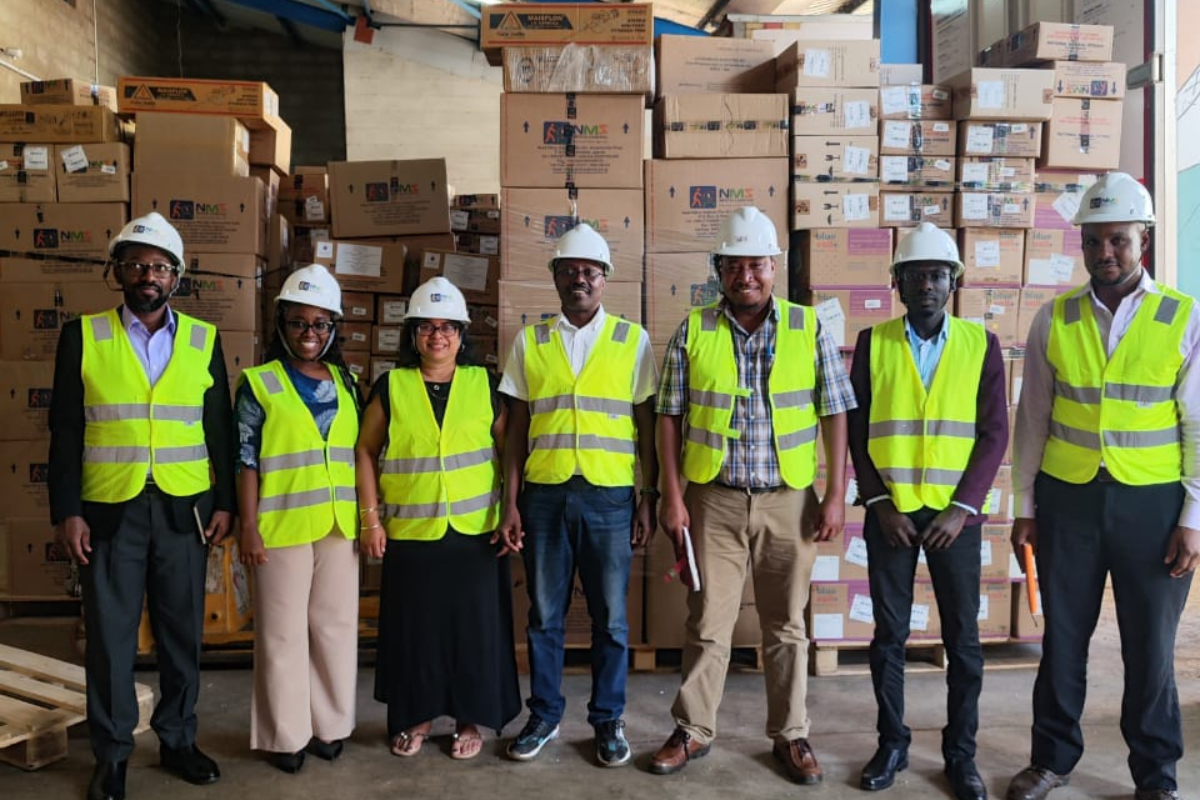
A field visit to Uganda National Medical Stores in April 2024 with partners inSupply.
Neglected tropical diseases (NTDs) affect more than one billion people—or one in eight persons— worldwide, with over 40% of those people living in sub-Saharan Africa. Their effects are devastating: blindness, disfigurement, and malnutrition, often leaving individuals with lifelong health complications, social stigma, cognitive impairment in children reducing access to education, and sometimes the inability to work leading to socioeconomic consequences.
But the 2030 NTD roadmap is changing this. In recent years, 50 countries have eliminated at least one NTD through mass campaigns that distribute large quantities of preventive medicine to under-resourced, and often remote populations. This success proves that when these medications are available in the right place, at the right time, and made available in the right way, NTDs can be stopped.
Pharmaceutical companies have donated billions of doses of the medicines at the heart of successful NTD programs for the last 20-30 years. These donations have been core to the mass campaigns that treat large affected populations, moving towards the elimination of these diseases. Delivering donated medicines to a country’s port, however, is only the first of many steps in the health supply chain. These medicines must then be distributed to the people who need them most before they expire. Without strong supply chain forecasting and inventory tracking systems, community drug distributors can run out of medicines, or medicines can expire sitting in remote facilities.
Strong supply chains, from pharmaceutical donors all the way down to communities at the last mile, are essential for timely delivery of these life-saving medicines. Each country has its own public health system and national health supply chains, so solutions must be specifically tailored to each country’s context and to the unique needs of the NTD medicines. Finding the most cost-effective and sustainable solutions requires close collaboration with a variety of teams in each country.
JSI leads the Supply Chain Technical Support Mechanism for NTD Programs (SCTSM), a five-year, multicountry project to strengthen NTD supply chains. The project focuses on eight African countries, each having between three and five endemic NTDs requiring millions of tablets each year to treat people at risk. To address this challenge, we collaborate with our East African affiliate, inSupply Health, and national ministries of health to improve medicine forecasting and strengthen inventory management, distribution, and reporting systems to ultimately build efficient and sustainable supply chains. Lessons from the eight pilot countries will be applied to NTD programs throughout and beyond the region.
To tailor solutions that meet the unique needs of each country, we began by working with national NTD programs and other in-country partners to evaluate the existing NTD supply chains using Supply Chain Compass, a tool developed to assess country context and priorities. This informed roadmaps for NTD supply chains that we developed with ministries of health, the World Health Organization, the pharmaceutical manufacturers that donate the medicines, and other partners. This assessment and co-design process enabled us to work towards establishing relevant standard operating procedures, digitizing information systems, and integrating NTD supply chains into national health distribution systems to support sustainable, country-led supply chains.
When countries have more accurate medicine forecasting, quality storage, efficient transportation mechanisms, and reliable information systems, large populations vulnerable to NTDs can be treated and these diseases can be reduced or even eliminated. Since 2023, JSI’s SCTSM project has supported the forecasting, ordering, receiving and distribution of almost 300 million tablets and has contributed to preventing the expiration of about 20 million tablets through close monitoring of inventory and problem solving with NTD programs.
Ultimately, strengthening supply chains is a sound investment in human health and dignity, ensuring life-saving medicines reach the communities that need them most.
We strive to build lasting relationships to produce better health and education outcomes for all.