Strengthening Data Quality in Laos: Building Systems That Last
story

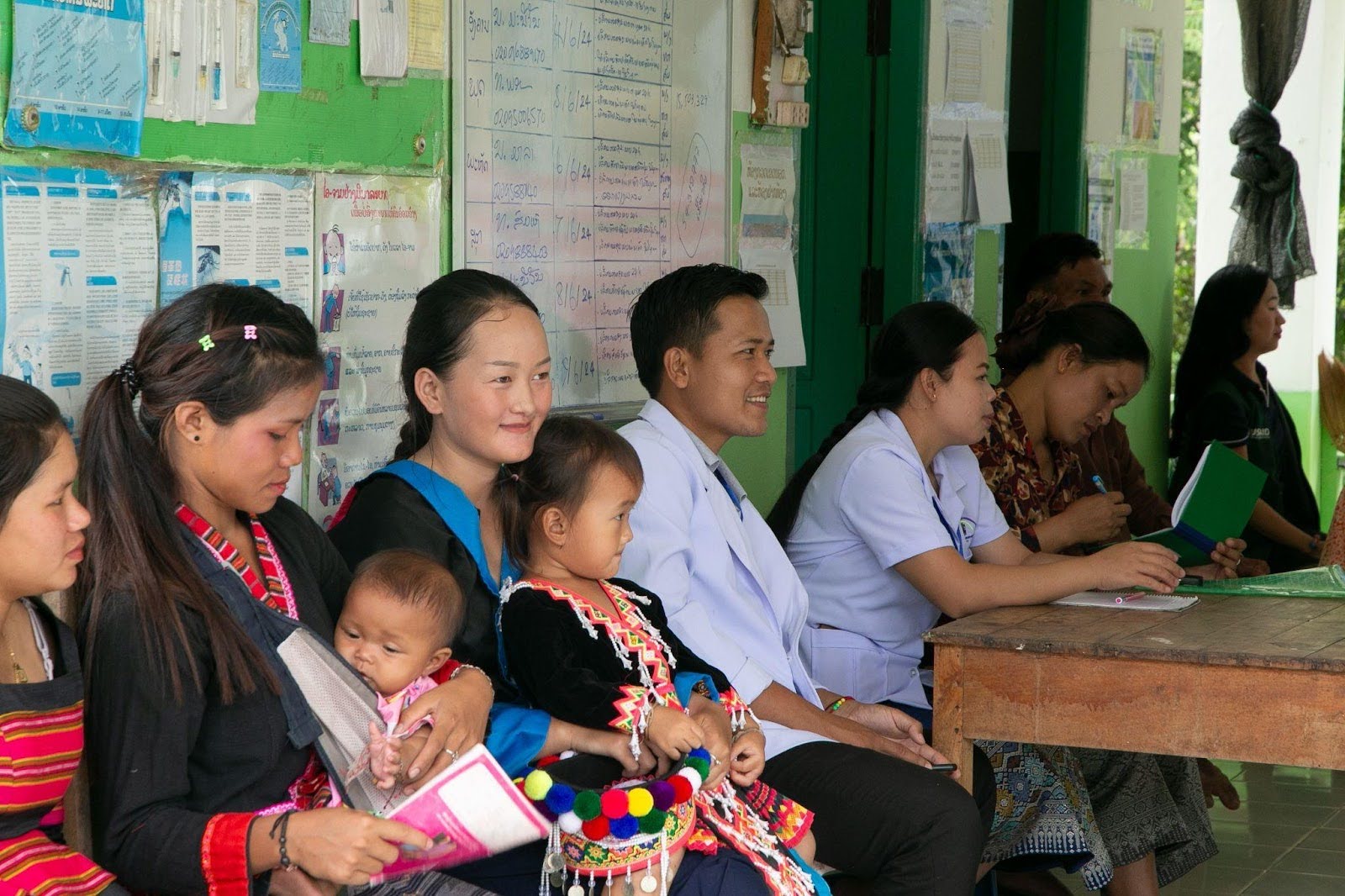
Clients engaging in child wellness visits at JSI-supported site in Oudomxay Province, Laos. Credit: JSI
Imagine you’re a district health officer planning a national immunization campaign. The Ministry of Health is invested in promoting the event, and it’s your job to reach every village. Routine reports suggest that over 70% of villages already have more than 90% of children vaccinated, but when teams reach the field, the reality is different. Vaccine cards are missing, registers are half-filled, some children are counted twice, while others are never recorded.
Inconsistent reporting makes routine data unreliable. These gaps aren’t trivial – they lead to wasted resources, missed populations, and a distorted understanding of program impact.” – Phoutthasone Phimmakaisone, Advisor at JSI
This isn’t hypothetical. Across Laos, health officials face these challenges every day. Remote villages are hard to reach, staff are stretched thin, reporting systems are fragile, and numbers on paper can give a false sense of progress while life-saving services fail to reach those who need them most.
Although data are collected at facility-level, supervisory visits in Laos rarely focus on whether data are accurate, complete, or used for decision-making. Without reliable data, it is difficult to know whether life-saving health interventions are reaching the people who need them most, whether resources are being used effectively, or whether reported progress reflects real change.
Improving data quality requires changes in how people work, how decisions are made, and how information is valued. Working in partnership with the Ministry of Health, JSI supported a structured, programmatic approach using the Exploration, Preparation, Implementation, and Sustainment framework to guide routine data quality assessments (RDQA). This framework moved improvement efforts through structured phases—from stakeholder listening to system assessments-enabling teams to not just spot errors, but uncover the systemic “why” behind them. The assessments enabled government teams to understand where systems were breaking down, align on realistic solutions, test solutions in real conditions, and embed successful practices into routine Ministry of Health workflows.
With support from JSI, the Ministry of Health convened a technical committee with representatives from key departments involved in data management. This group created a shared space for aligning stakeholders, clarifying roles, and ensuring that any improvements would be government-led, practical, and adaptable to local realities. This committee identified RDQAs as a core strategy for strengthening data accuracy, reliability, and use, and analyzed assessment findings.
JSI then developed a simple, low-tech tool that guides staff through each step of the RDQA by verifying source documents, checking completeness, and ensuring consistent reporting. The Ministry of Health integrated RDQAs into routine supervision rather than adding them as a parallel activity, reducing burden on health workers while increasing the usefulness of the data collected.
The findings of the assessments revealed clear skill gaps, leading to targeted trainings in data literacy, data quality, and action planning. These were paired with reflection workshops that reframed data verification not as fault-finding, but as a learning process – a way for teams to strengthen services together.
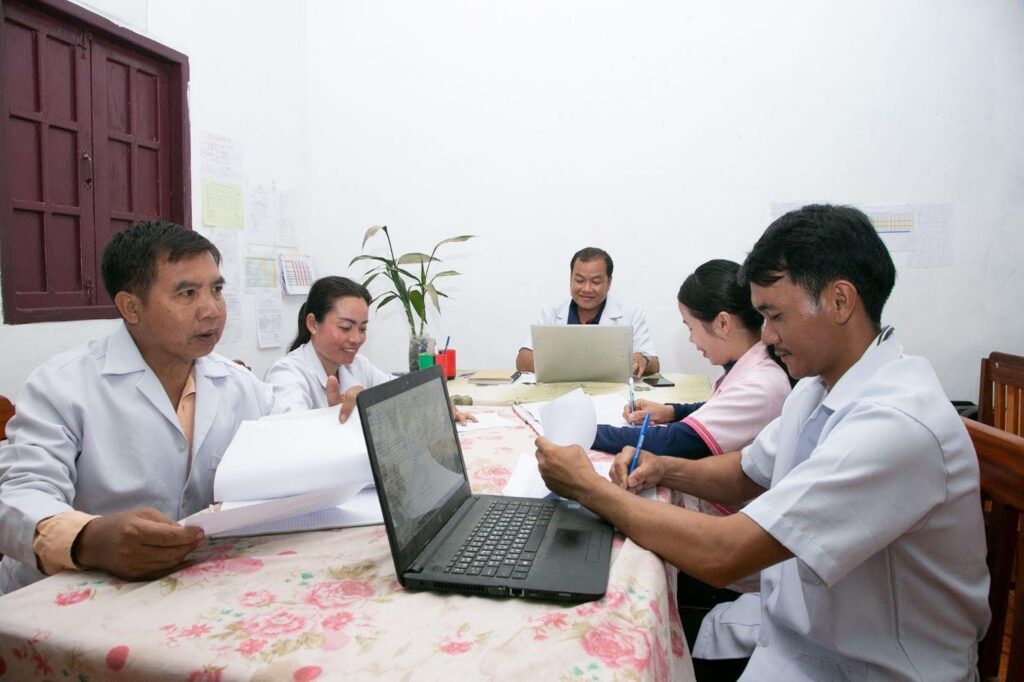
Data capture, analysis, and use is a central tenet of our work in Laos. Credit: JSI.
Between 2025 and 2026, 300 RDQAs were conducted, reaching 63 of 212 JSI-supported health centers in just five months, with all assessed facilities developing and implementing action plans. Follow-up on these plans is conducted through routine district and provincial Ministry supervision visits, reinforcing accountability within existing government management structures.
Among health centers assessed for five key indicators (four ANC visits, skilled birth attendance, measles vaccination, childhood diarrhea treated, and pneumonia treated), average scores improved across all indicators. Report completeness increased by between 19 and 33%, timeliness improved by between 14 and 27%, source document completeness rose by between 6 and 21%, and system assessment scores increased by 22%.
Stronger reporting completeness, timeliness, and verification enable district and provincial teams to identify service gaps earlier, target supervision more effectively, and ensure staff, commodities, and outreach efforts reach underperforming facilities. Over time, these improvements contribute to improved maternal, newborn, and child health outcomes,
Beyond the numbers, behavior is changing. Provincial and district teams are reviewing data regularly, prioritizing low-performing sites, producing their own reports, and using findings to guide decisions.
In several districts, supervisors have independently begun applying RDQA tools beyond project-supported facilities using their own supervisory visits. This is an early indication that the approach is being institutionalized within routine government systems, with requests to expand indicators and coverage continuing to grow. RDQAs are no longer an “extra” activity. They are becoming part of how the system works.
We strive to build lasting relationships to produce better health and education outcomes for all.