Closing the HPV Vaccination Gap: 4 Strategies to Reach Out-Of-School Girls
viewpoint

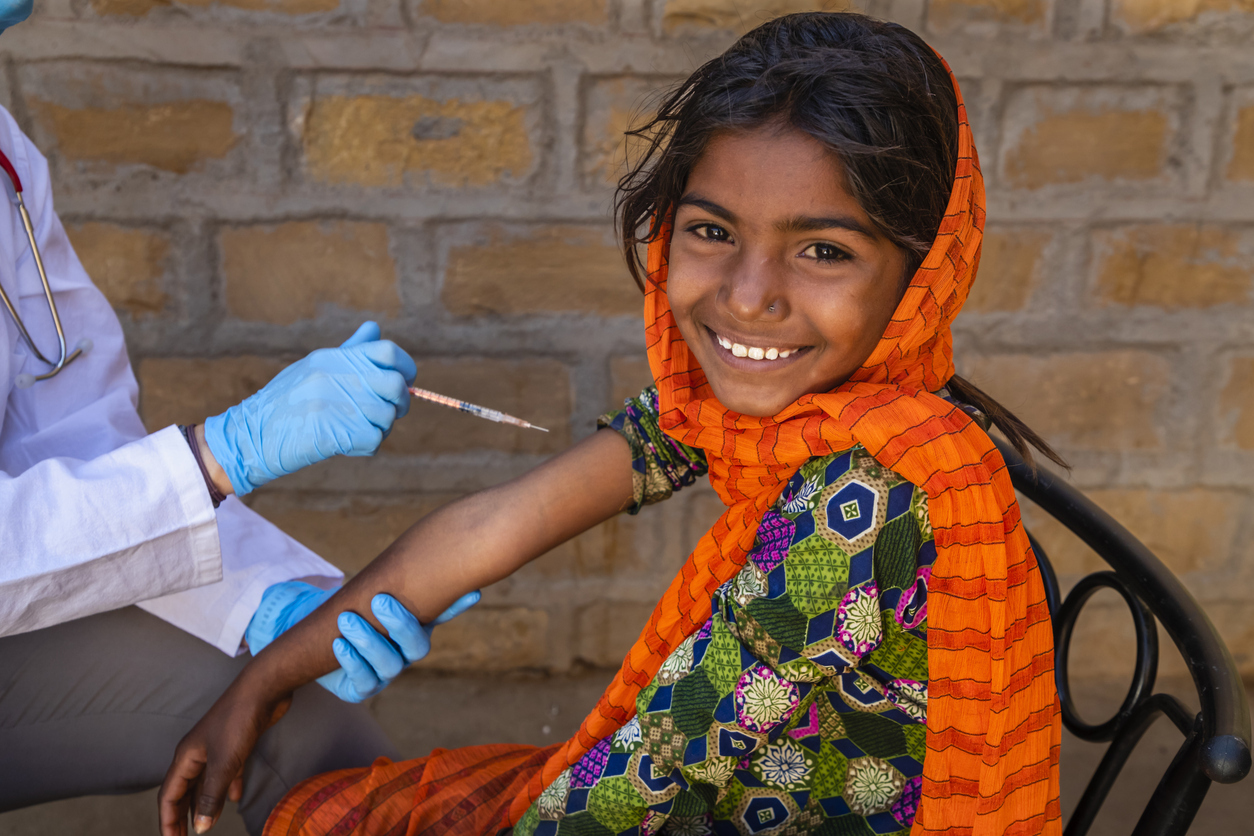
The HPV vaccine is a life-saving tool against cervical cancer, but every girl is not yet able to access it. Girls who are out of school (OOS) may miss HPV vaccination opportunities because they are often outside the reach of school-led vaccination efforts. According to a JSI-led study of 10 countries, school-based vaccination reaches a high proportion of girls (89%), but coverage can vary significantly by country and sub-national context. Only 54% of OOS girls receive at least one dose of HPV vaccine for protection. To better understand the complexities of reaching OOS girls, the HPV Vaccine Acceleration Program Partners Initiative (HAPPI) Consortium* conducted studies across 19 countries to find out what it takes to reach OOS and other unvaccinated groups of girls. Here are four critical considerations for implementers to help move unvaccinated girls from “missing” to “protected.”
OOS girls aren’t a singular group. The research found four categories of OOS girls: (1) girls engaged in labor to support their families; (2) girls displaced by conflicts or national disasters; (3) girls excluded from education because of restrictive cultural norms or early marriage, and who may attend non-formal schools; and (4) girls with disabilities who may be at home due to social stigma and or a lack of inclusive services. Health programs first must understand the reasons why girls are not in school and, therefore, how and where these girls can be reached. By recognizing different lived experiences, health workers can adapt delivery strategies to meet girls where they are, whether that is a refugee camp, a market, or a private home.
With the war, there are also more and more girls who cannot go to school because of the security context that prevails in these two regions.” – A stakeholder in Cameroon.
Estimating the size and location of OOS girls is a significant challenge in planning HPV vaccination services. Because not all girls are included in official records, the denominator is typically estimated by triangulating national census and school enrollment data to provide a baseline estimate. These estimates don’t always provide the details a health worker needs to know in determining which houses to visit. And while door-to-door counting is more accurate, it is expensive and time-consuming. The research found that spending a lot of money on a “perfect count” in a small area is less efficient than using those limited resources to deliver vaccines in high-need areas.
The identification of out-of-school girls for HPV is dependent on three levels: the community health workers, the volunteers, and the local leaders. These are the ones that go around in the villages, especially the volunteers, to identify those out-of-school girls because they live within the same villages. They know the girls that are in the villages. They know which girl doesn’t go to school and why, so they help the community health workers to identify such type of girls.” -Immunization officer, Malawi.
Successfully reaching OOS girls requires efforts that extend beyond the health sector and involve national and regional coordination with ministries for education and social affairs, professional associations, civil society organizations, and local community leaders. At the community level, village and religious leaders, social workers, and community health volunteers play a critical role in knowing girls who may be unvaccinated, building trust, and sharing reliable information around vaccines.
Even when families understand that the HPV vaccine is life-saving, practical barriers stand in the way. Many families have competing priorities, and childcare and work make it hard to spend hours waiting at a clinic. If girls cannot come to the clinic or school, the clinic must go to them.
The problem is they [families] are busy. They don’t have time, they can’t get up at 8 AM and wait until 11 AM for a vaccine.” -Health worker, Senegal.
Some solutions include offering evening or weekend hours for vaccination at health facilities; setting up vaccination posts at vocational centers, non-formal schools, markets, religious gatherings, and border crossings; and providing services through mobile outreach and home-based delivery for nomadic populations, girls with disabilities, and other groups. Some pastoralist communities have even integrated HPV vaccination into livestock health services.
By aligning vaccine delivery with the everyday realities of these girls, we can make sure every girl has the opportunity to receive it.
To learn more about the study findings and the country-level data that informed these insights, explore the related webinar and technical briefs developed by the HAPPI consortium partners:
*The HAPPI Consortium is funded by the Gates Foundation and is managed by JSI together with Clinton Health Access Initiative (CHAI), the International Vaccine Access Center (IVAC) at the Johns Hopkins Bloomberg School of Public Health, Jhpiego, and PATH.
We strive to build lasting relationships to produce better health and education outcomes for all.