Bringing Life-Saving HPV Vaccines to Ethiopia’s Most Remote Communities
story

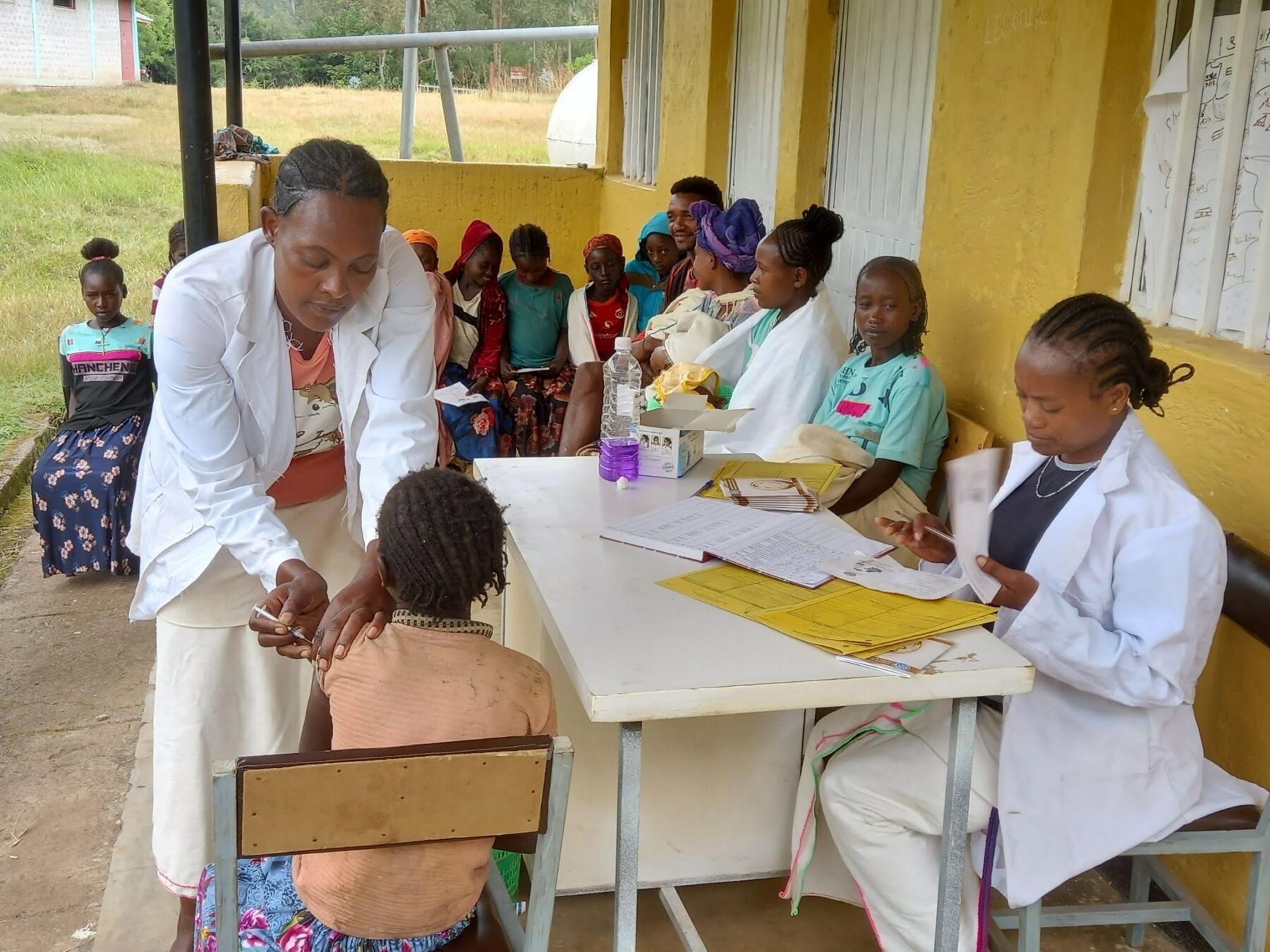
HPV vaccination integrated with routine immunization at Yayibe health post. Credit: JSI Ethiopia
The Derashe Woreda sits in a rugged, mountainous region of Ethiopia. Its geographic isolation has been a barrier to the delivery of life-saving vaccines. For young women living here, cervical cancer is a looming risk, but one that Ethiopia has committed to eliminating through human papillomavirus (HPV) vaccine campaigns.
During a 2024 national campaign, JSI and Girl Effect, working with the Ministry of Health, deployed demand-generation through community outreach that successfully improved HPV vaccine awareness and uptake. However, a disparity remained: only 32% of out-of-school girls were vaccinated compared to 85% of their in-school peers. This gap was particularly concentrated in remote areas like Derashe, where traditional campaigns often missed the many young girls outside the classroom.
In response, JSI, Girl Effect, and the Ministry of Health committed to tailored demand generation approaches for out-of-school girls, while integrating HPV vaccination into routine immunization services to ensure more accessible and sustainable vaccine uptake.
For families like Damenech Taye’s, eager to protect her daughters from cervical cancer, this approach meant her nine-year-old, out-of-school child, left unprotected from the previous school-based campaign, could access the vaccine at any time through their village health post.
In order to enhance accessibility of the vaccine at a local rural health post, health extension workers (HEWs) and village health leaders conducted intensive house-to-house contacts to identify unvaccinated girls. This exercise identified 2,280 out-of-school girls in Derashe alone. The HEWs added these young girls to the routine immunization schedule and secured a supply of the required doses. Complementing this effort, JSI employed tailored demand generation, recognizing that generic messaging often fails to resonate in marginalized or unique cultural settings. Using our culturally adapted, local-language tools, HEWs engaged in both one-to-one and group dialogues. These interactions provided a safe space to address common myths and build trust with both the girls and caregivers.
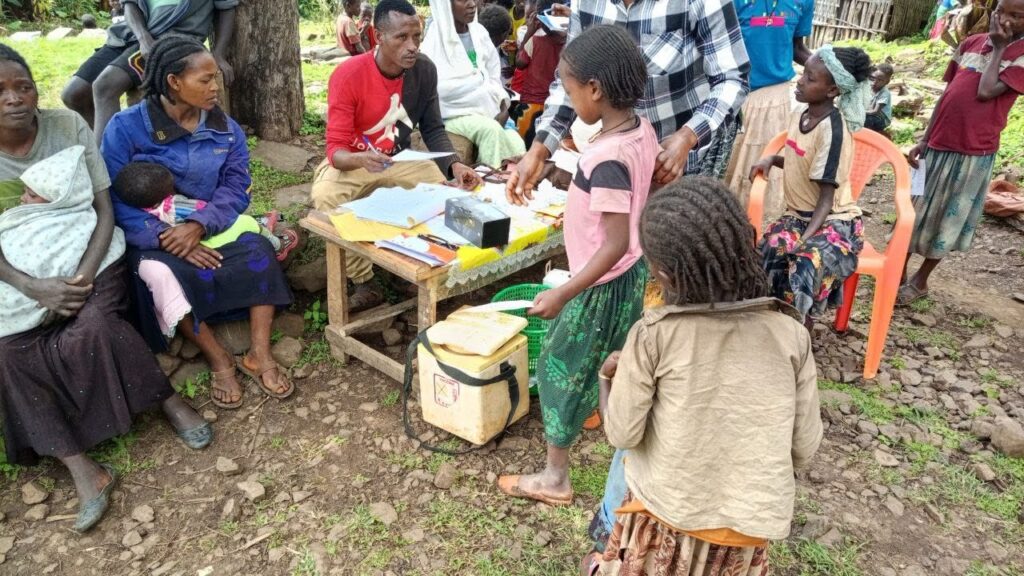
HPV vaccination integrated with routine immunization in Yayibe HP outreach site. Credit: JSI Ethiopia
According to a representative from the woreda health office, the integration of HPV vaccines into routine immunization services, combined with targeted community outreach, led to a significant milestone. Over 2,000 girls were vaccinated in just three months in Derashe.
Success was rooted in transitioning from campaigns to a permanent, reliable health service. Derashe is now serving as a blueprint for the South Ethiopia Regional Health Bureau, which plans to scale this routinization model across all its zones to ensure that no girl is left behind in the fight against cervical cancer. JSI presented lessons on how to plan and conduct HPV vaccination routinely, instead of solely as a campaign, during consultative meetings organized by the Ministry of Health. Our experience in Derashe served as a prime example, resulting in the Ministry of Health developing a guideline for the provision of routine HPV vaccination, which will be put into effect, nationwide, this year.
We strive to build lasting relationships to produce better health and education outcomes for all.