Transforming Health Care: A Case Study of Ferensay Health Center
story

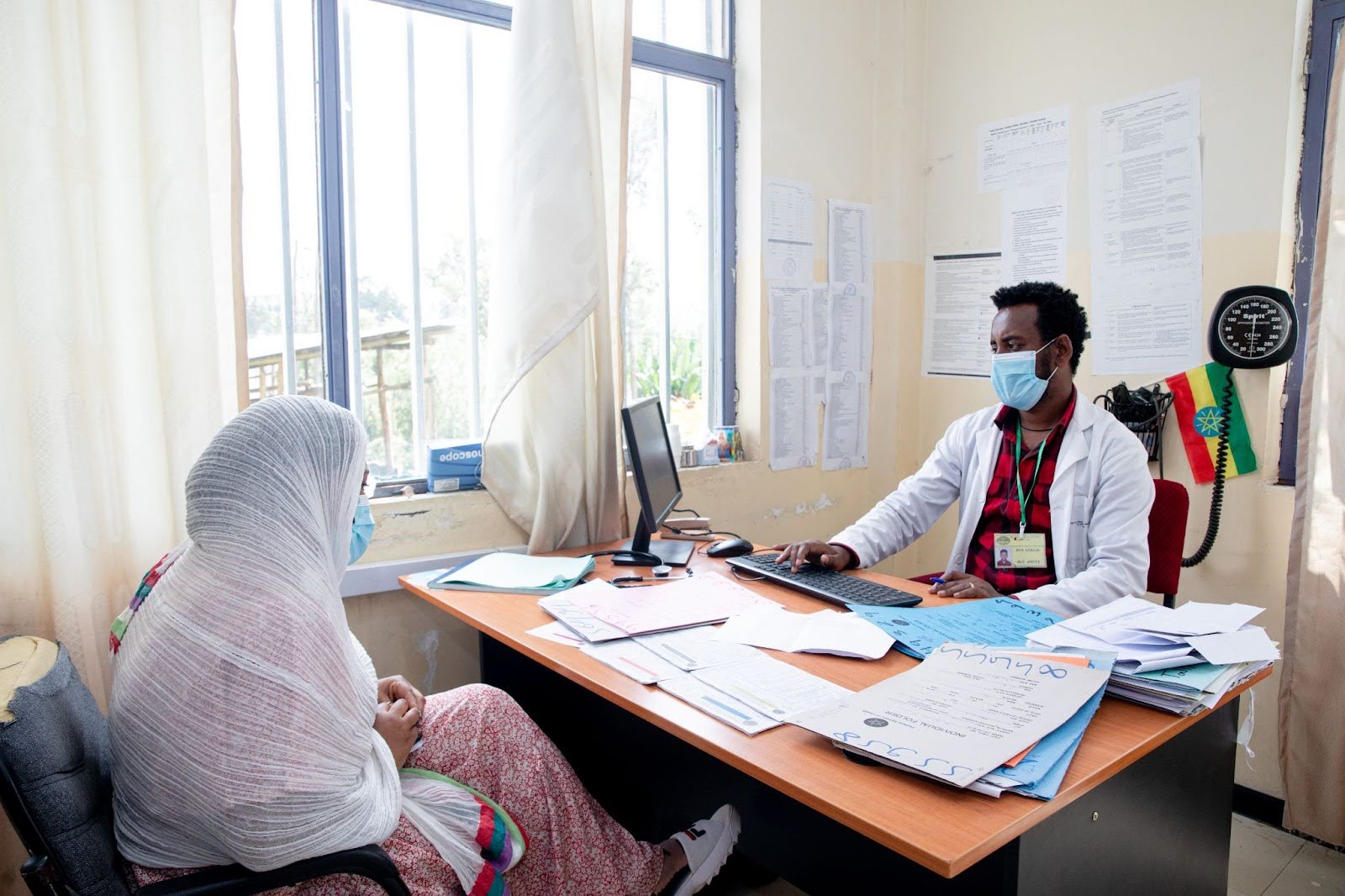
Clinician using the electronic medical records solution – a digital health record – at Ferensay Health Center. Credit: JSI Ethiopia
In the last decade, Ethiopia has committed to a complete digitization of its health sector, streamlining data and ensuring its use toward program decision-making. This is a massive undertaking and investment to improve the health care experience, including clinic workflows, medical product availability, and cost. Outcomes of this digital transformation are now coming into focus. At the forefront of the transformation stands the Ferensay Health Center – a busy and large health facility once overwhelmed with long patient waiting lines and chaotic workflows.
Ferensay is a high-volume health center, not far from Addis Ababa. It addresses a comprehensive set of patient needs to a catchment population of more than 45,000. The center operates through eight outpatient departments and a central onsite laboratory and pharmacy. Internal communications between these services to support the care continuums for patients were non-existent in years prior, forcing redundancies, gaps in care, and less than optimal patient outcomes.
“Before, this area was overflowing with patients, especially in the mornings. We would scramble to locate records, with a number of patients waiting. It used to take patients, on average, about 30 minutes from when they entered the health center until the first contact with a doctor. Now, it takes about 10 minutes,” explains Tringo Haymanot, a staff member of Ferensey.
In 2022, JSI began its collaboration with Ferensay to increase efficiency and to meet the hospital’s quality of care objectives. This collaboration led to implementation of electronic medical records (EMR), a digital medical chart that captures patient information like demographics, vital signs, notes, diagnoses, and treatment plans. JSI also worked with Ferensey to install the Electronic Auditable Pharmaceutical Transaction and Services (eAPTS), Vitas, and Dagu applications – electronic supply chain management solutions that accurately and efficiently manage stock supply. The EMR integrates with the eAPTS pharmacy system, which connects to Dagu store management and Vitas distribution hubs, providing complete interoperability between service departments. Seamless digital communication, wherein patient records are queued up at check-in, clinicians alert laboratory of diagnostic orders or the pharmacy of prescription needs, while pharmacy departments are able to track stock status and communicate with national stores, is a game-changer for a hospital with as many departments and workflows as Ferensey.
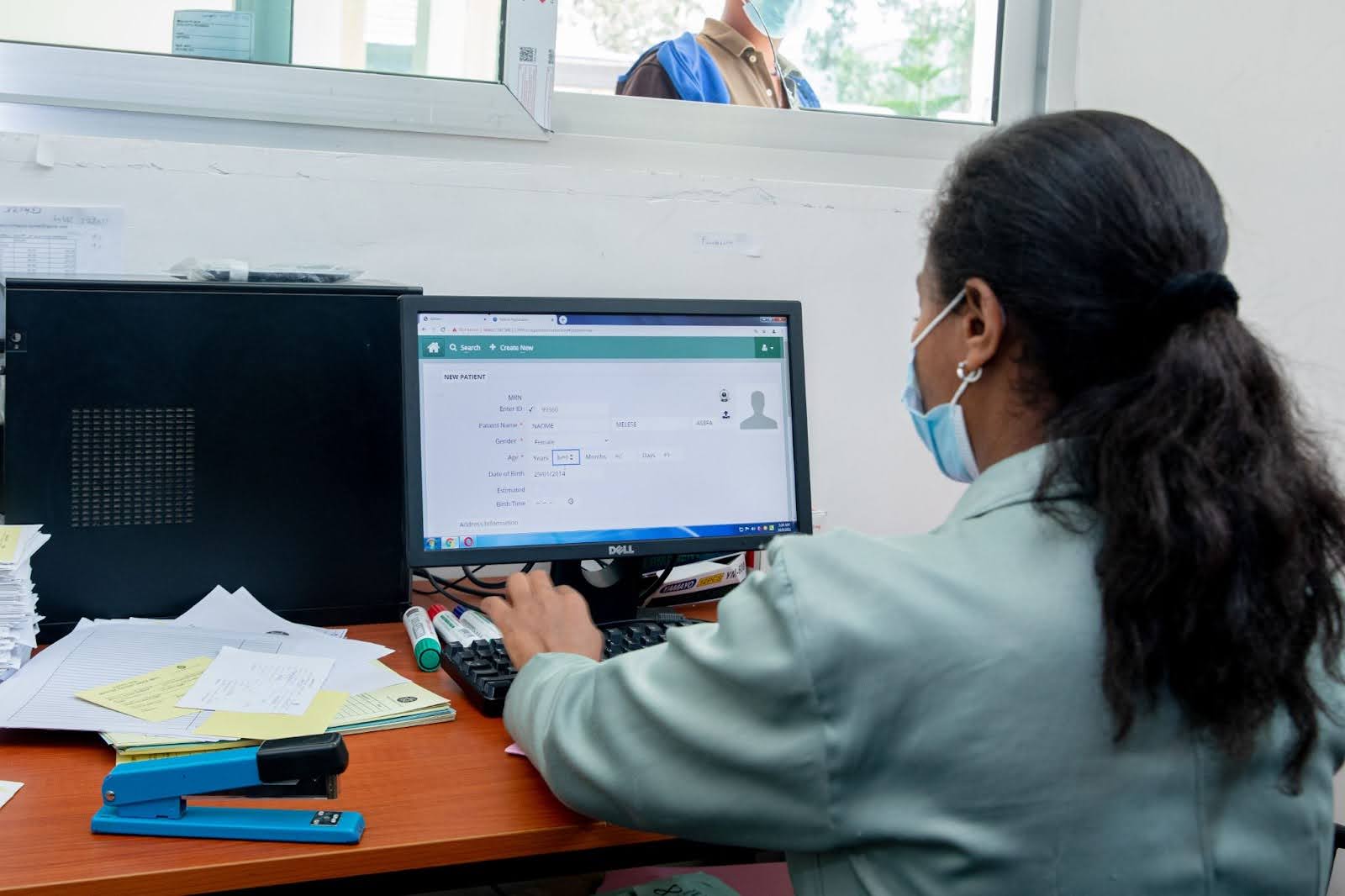
Ferensey Pharmacy Department. Credit JSI 2022.
All of these solutions have tightened processes both for the patient and for the health workers. Patients are no longer waiting for health records to be pulled or clinicians to place orders with labs and pharmacies. Clinicians easily move through the EMR to find patient history and place orders. The pharmacists, similarly, are using tools that simplify inventory management. Explains Tigist Demisse, head of pharmacy at Ferensey, “What used to take us 10 days on inventory tracking now takes us about two – and it has also reduced frequency in errors and data discrepancies.”
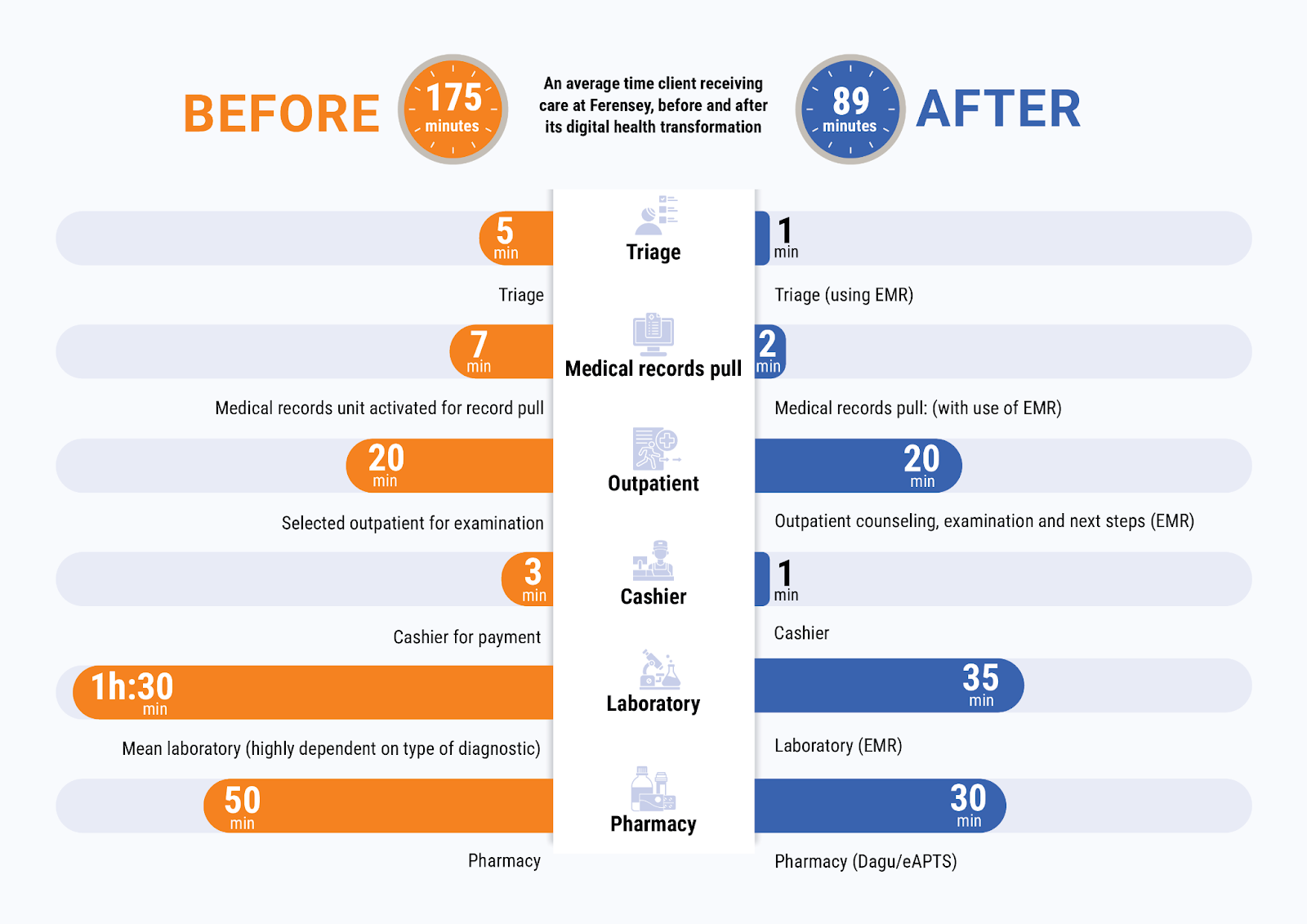
In proving that interconnected digital tools like EMR, eAPTS, Vitas, and Dagu can dramatically reduce waiting times, eliminate supply chain errors, and deliver better patient outcomes, Ferensay is doing more than just serving its community. It’s writing the blueprint for a digitally powered health system across Ethiopia, setting a new, higher standard for efficient, high-quality care, and bringing the national dream of universal health coverage closer to reality.
We strive to build lasting relationships to produce better health and education outcomes for all.